Skip to content
  • Solutions
    Biometrics for OEM
    Government ID &
    Phygital Identity
    Explore more

    • Biometric Platform for ID Issuance
    • Voter Management Platform
    Biometrics for OEM
    Border Control &
    Passenger Facilitation
    Explore more

    • Border Control Platform
    • Smart Corridors & eGates
    Biometrics for OEM
    Criminal Justice &
    Law Enforcement
    Explore more

    • ABIS for Criminal Investigation
    Biometrics for OEM
    Enterprise Identity
    Verification
    Explore more

      • For Enterprises
      • For System Integrators
    • Identity Verification Service
    • Identity Verification Toolkit
    Biometrics for OEM
    Embedded Biometrics Biometrics for your devices and solutions
    Explore more
  • Technology
    Core Biometric Technology
    • Biometrics for OEM Fingerprint Recognition
    • Biometrics for OEM Facial Recognition
    • Biometrics for OEM Iris Recognition
    • Biometrics for OEM Contactless Palm Recognition
    Biometric Identity Verification
    • Biometrics for OEM Biometric Face Verification
    • Biometrics for OEM Age Estimation
    • Biometrics for OEM Liveness detection
    • Biometrics for OEM Deepfake Detection
    • Biometrics for OEM Video Injection Detection
    • Biometrics for OEM Identity Document Verification
    • Biometrics for OEM NFC Verification
  • Resources
    • Downloads & Webinars
    • For Developers
    • Industry insights
  • News
    Latest news
    The Most Biometric Building in the World.
    Enter here Innovatrics Biometric Building
    Innovatrics Advances to First Place in NIST FATE AEV Composite
    Innovatrics Advances to First Place in NIST FATE AEV Composite Read more
    innovatrics masterclass panama
    Innovatrics Masterclass Panama Brings Hands-On ABIS Training to Latin America Read more

    Show all news
  • References
    Government
    Multi‑Tenant Biometric ID Platform Transforms Healthcare in Congo
    Republic of Congo | Government Multi‑Tenant Biometric ID Platform Transforms Healthcare in Congo Read more
    Remote Identity Verification Modernizes National Pension Fund Management
    South-East Asia | Government Remote Identity Verification Modernizes National Pension Fund Management Read more
    Enterprise
    Innovatrics identity verification service for autonomous stores
    Slovakia | Enterprise COOP Jednota Secures Unstaffed Stores With Identity Verification Read more
    Innovatrics identity verification service
    EU | Enterprise DigiSign Builds a Universal ID Verification Layer for Digital Signing Read more

    Show all references
  • About Us
    Next Event
    EXHIBITOR

    World Police Summit 2026

    When

    16 - 18 November 2026

    Where

    World Police Summit 2026Dubai, United Arab Emirates

    Show all events
    • About Us
    • Careers
    • Events
    • Benchmarks & Certificates
    • Biometric Ventures
    • Biometrics House
  • Contact Us
  • Partners
  • Solutions
    • Government ID & Phygital Identity
      Government ID &
      Phygital Identity
      Explore more

      • Biometric Platform for ID Issuance
      • Voter Management Platform
    • Border Control & Passenger Facilitation
      Border Control &
      Passenger Facilitation
      Explore more

      • Border Control Platform
      • Smart Corridors & eGates
    • Criminal Justice & Law Enforcement
      Criminal Justice &
      Law Enforcement
      Explore more

      • ABIS for Criminal Investigation
    • Enterprise Identity Verification
      Enterprise Identity
      Verification
      Explore more

        • For Enterprises
        • For System Integrators
      • Identity Verification Service
      • Identity Verification Toolkit
    • Embedded Biometrics
      Embedded Biometrics
      Explore more
  • Technology
    • Core Biometric Technology
    • Fingerprint RecognitionFingerprint Recognition
    • Facial RecognitionFacial Recognition
    • Iris RecognitionIris Recognition
    • Contactless Palm RecognitionContactless Palm Recognition
    • Biometric Identity Verification
    • Biometric Face VerificationBiometric Face Verification
    • Age EstimationAge Estimation
    • Liveness detectionLiveness detection
    • Deepfake DetectionDeepfake Detection
    • Video Injection DetectionVideo Injection Detection
    • Identity Document VerificationIdentity Document Verification
    • NFC VerificationNFC Verification
  • Resources
    • Downloads & Webinars
    • For Developers
    • Industry insights
  • News
  • References
  • About Us
    • About Us
    • Careers
    • Events
    • Benchmarks & Certificates
    • Biometric Ventures
    • Biometrics House
  • Contact Us
  • Partners
25. December 2024

Enhancing Accuracy in Remote Identity Verification: Beyond Reading ID Cards

Enhancing Accuracy in Remote Identity Verification: Beyond Reading ID Cards

(This is a part of the series about remote identity verification solutions and how to successfully integrate them into your business. For all parts of the series, click here.)

What you’ll learn in this part:

  • The importance of Optical Character Recognition (OCR) technology
  • Why uploading saved photos is a risky decision
  • The technologies behind the detection of anomalies in ID cards

In the evolving landscape of remote identity verification, ensuring accurate processing of identity documents (IDs) is paramount. As industries adopt remote solutions, the demand for precise, reliable, and secure identity verification continues to grow. This part of the series focuses on the key technologies and challenges in accurately reading and processing identity documents.

The Role of Optical Character Recognition (OCR) in ID Processing

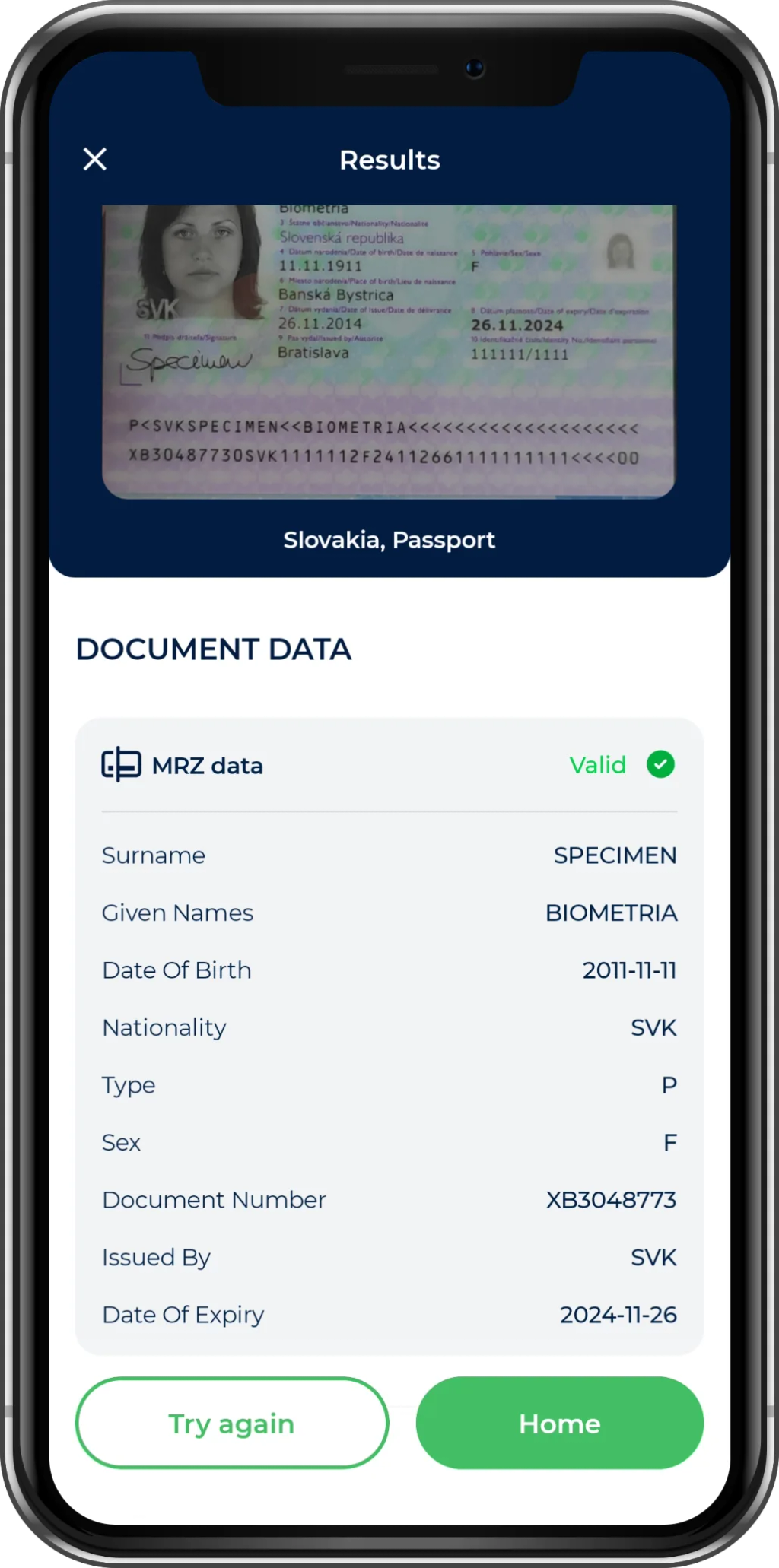
Optical Character Recognition (OCR) technology has become a cornerstone of identity verification. OCR is essential for quickly and accurately extracting text from ID cards, passports, and other documents. By converting the text from scanned images into machine-readable text, OCR enables systems to capture essential details such as name, birthdate, and document number with minimal user input.

Document Capture with AI powered OCR

However, OCR’s effectiveness depends on several factors:

  • Quality of the Image: A clear, high-resolution image ensures that OCR can correctly identify and interpret the text. Low-quality images, on the other hand, can lead to errors.
  • Document Variations: ID documents differ in format, font, and language. OCR technology must be adaptable to recognize and process various documents accurately.
  • Error Correction Algorithms: Advanced OCR systems integrate error correction algorithms that can detect and rectify common mistakes, such as misreading similar-looking characters (e.g., ‘0’ vs. ‘O’).
  • Integration with Databases: OCR outputs are cross-referenced with government or business databases to validate the extracted information, ensuring that the data corresponds to existing records.

Modern OCR systems go beyond mere text recognition. They incorporate AI and machine learning algorithms to improve accuracy, even in less-than-ideal conditions. Some OCR solutions now offer multilingual support, enabling them to process documents from different countries seamlessly.

Why Automatic Document Detection and Capture Matters

To ensure that OCR systems work optimally, automatic document detection and capture play a critical role. These systems assist users in aligning their documents correctly in front of a camera, ensuring that the entire document is captured with clarity. Automated capture solutions guide users with visual cues, making the process user-friendly and efficient.

In a typical remote identity verification process, the document detection technology helps in:

  • Auto-Aligning the Document: The system detects the edges of the document and aligns it properly to avoid any skew or cropping.
  • Auto-Capturing at the Right Moment: These systems take the photo at the optimal time, ensuring that the document is not blurred and that all essential information is visible.
  • Lighting and Contrast Adjustment: Automatic capture systems often adjust the lighting and contrast in real time to ensure that the document is captured with maximum clarity.

This automation minimizes the chances of human error, making the document capture process seamless and reducing the time required for verification.

The Dangers of Uploading Existing Photos for Verification

Although uploading existing photos may seem like a convenient option, it introduces several risks in remote identity verification. One of the primary concerns is the authenticity of the uploaded photo. Pre-existing images can be easily tampered with, making it difficult to ascertain whether the person in the photo is the actual owner of the ID.

With tools like Photoshop readily available, altering an image to commit fraud is relatively easy. This can lead to identity theft and other forms of fraudulent activity. Existing photos may not also meet the standards required for identity verification. Poor lighting, low resolution, and improper angles can prevent accurate facial recognition or OCR processing.

Older photos may no longer reflect the current appearance of the individual. This may result in mismatches during the verification process. Moreover, pre-uploaded photos do not allow for liveness detection, which is crucial for ensuring that the person being verified is physically present and not attempting fraud through static images.

For these reasons, real-time capture of photos during the verification process is preferred. This ensures that the captured image is consistent with the ID being verified and reduces the likelihood of fraud.

Detecting Anomalies on ID Cards

Another critical aspect of remote identity verification is detecting anomalies on ID cards. Anomalies can include tampered data, inconsistent fonts, or even counterfeit IDs. Sophisticated verification systems employ advanced techniques to detect these irregularities.

AI-driven systems can compare ID card patterns against known templates, identifying discrepancies in design or format. Many modern ID cards include security features like microprinting and holograms that are difficult to replicate. Verification systems can detect these elements and flag any missing or altered features.

ID cards often include barcodes or QR codes that contain encrypted data. Anomaly detection systems can scan and validate these codes to ensure they haven’t been tampered with. Modern verification systems are now capable of analyzing an ID’s surface for signs of tampering, such as scratches, glue residue, or inconsistent textures. These may indicate attempts to alter the document.

Detecting anomalies is crucial for preventing fraudulent activities, especially in high-security sectors like banking and government services. By catching these irregularities early, businesses can mitigate risks and protect their customers from identity theft.

The Promises of NFC Technology

Near Field Communication (NFC) technology is increasingly being integrated into remote identity verification solutions, especially with the rise of electronic IDs (eIDs). NFC allows for secure data transfer between an NFC-enabled smartphone and an electronic ID card, enabling a more secure and efficient verification process.

Enhancing Accuracy in Remote Identity Verification: Beyond Reading ID Cards

NFC can read data directly from an electronic ID card by simply tapping the card against a smartphone. This eliminates the need for manual data entry and reduces the chances of errors. NFC technology uses encryption, making it more secure than traditional methods of reading ID information. The data transfer is almost instantaneous, reducing the risk of interception. Furthermore, NFC-enabled devices can perform real-time biometric matching by reading the data stored on the eID. It compares it with the user’s live biometrics, guaranteeing an accurate identity match.

As more countries adopt electronic IDs, NFC technology facilitates international travel, cross-border identity verification, and access to global services, making remote identity verification more seamless and efficient.

The Rise of eIDs

Electronic IDs are becoming more common, with countries like Estonia and Germany leading the way in adopting digital identification solutions. These eIDs can store a wealth of information, including biometric data, which can be verified using NFC technology. This provides a higher level of security compared to traditional physical IDs, making them ideal for remote identity verification.

As remote identity verification continues to evolve, the technologies discussed above will play an increasingly critical role in ensuring security, accuracy, and efficiency. By leveraging OCR, automatic document detection, NFC, and anomaly detection, businesses can provide a seamless and secure verification experience for their customers.

Looking for all or some of these technologies ready for easy integration?

Contact Us


You can find other parts of the Elements of Digital Onboarding Series here

Share article:
  • Facebook
  • LinkedIn
  • X
  • Email
SOLUTIONS
  • Government ID & Phygital Identity
    • Biometric Platform for ID Issuance
    • Voter Management Platform
  • Criminal Justice & Law Enforcement
    • ABIS for Criminal Investigation
  • Border Control & Passenger Facilitation
    • Border Control Platform
    • Smart Corridors & eGates
  • Enterprise Identity Verification
    • Identity Verification Toolkit for Platforms
    • Enterprise Identity Verification Platform
    • Identity Verification Service
    • Identity Verification for System Integrators
  • Embedded Biometrics
  • Fingera - Time & Attendance Solution
  • Custom Projects
TECHNOLOGY
  • Core Biometric Tech
    • Fingerprint Recognition
    • Facial Recognition
    • Iris Recognition
    • Palm Recognition
  • Biometric Identity Verification
    • Face Verification
    • Age Estimation
    • Liveness Detection
    • Deepfake Detection
    • NFC Verification
    • Identity Document Verification
  • Insights Into the Technology of Trust
    • Building with Trust
    • Sharing Trust
    • Investigation with Trust
    • Trust the Vote
    • The Cost of Unfair AI
OTHERS
  • Resources
    • Case Studies
    • Downloads & Webinars
    • Events
    • Biometric Conference Series
    • Glossary
  • Company
    • About Us
    • News
    • Benchmarks & Certificates
    • Careers
    • Biometric Ventures
    • Our partners
  • EU Project
  • Contact Us
Innovatrics logo

Our passion for technology brings biometric benefits to millions of people.

    • Privacy Policy
    • Cookie Policy
    • Terms of Use

© 2026 Innovatrics. All rights reserved.