Biometrics is now a typical part of consumer services. Ensuring a positive experience with remote onboarding is paramount for success
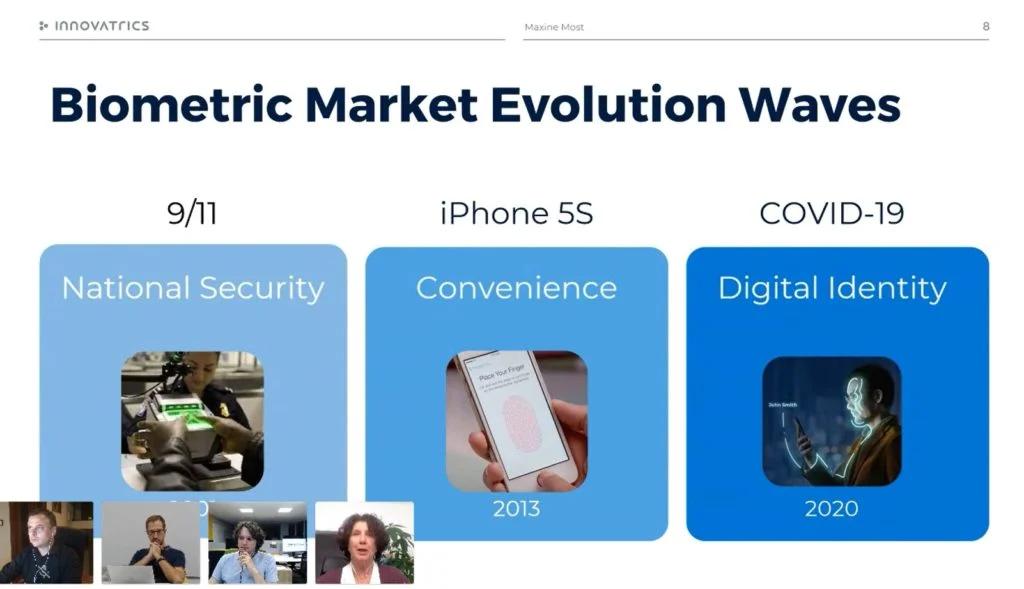
“For biometrics, iPhone 5S was the turning point. It transformed government-exclusive, high-security technology into an everyday occurrence,” says seasoned biometrics analyst, Maxine Most, from Acuity Market Intelligence. She was the main speaker in Innovatrics’ webinar that discussed the latest developments in remote onboarding technology.
Most sees COVID-19 as a catalyst in biometrics comparable to the introduction of iPhone 5S seven years ago: “What took years in e-commerce has happened in weeks during the first wave of COVID-19.” In fact, it took 10 years to increase e-commerce penetration by 10 percentage points to 16 % in 2019. It then increased by the same amount in just eight weeks when COVID-19 first struck.
“What took years in e-commerce has happened in weeks during the first wave of COVID-19.” – Maxine Most
Reliable means of evaluation
For consumers, remote access to services is now an ordinary experience. Before the pandemic, remote onboarding was the domain of financial services; they needed to manage their risks and comply with strict regulations. Remote onboarding helped them significantly lower the cost of acquiring new and underserved clients provided that the technology was secure enough. When the pandemic struck, the pioneers of the biometric approach became the first choice for consumers under lockdown.

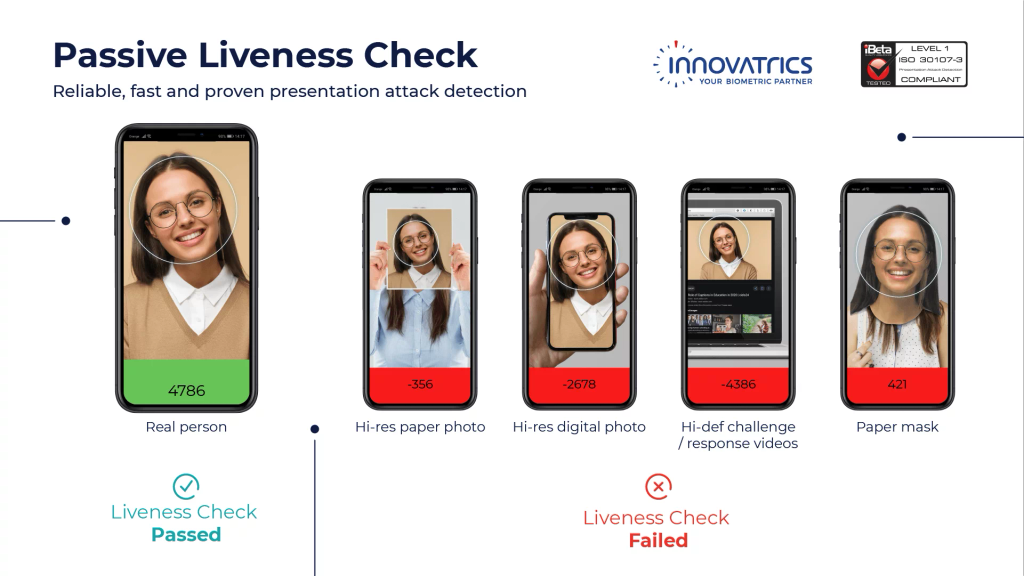
The demand for remote onboarding solutions from banks, insurance brokers and telecoms is now higher than ever. “Once the complex technology starts flying off the shelves, it’s necessary to have a reliable means of its evaluation,” explains Most. In biometrics, the industry standard is the face recognition vendor test by the US-based NIST. For liveness tests, it’s a must due to Know Your Customer (KYC) requirements, wherein NIST-approved, iBeta labs, provides testing. Innovatrics is highly successful in both.
New use cases for digital onboarding on the rise
Remote onboarding, pioneered by banks and other security-focused industries, is now permeating into other sectors – and it is changing consumers and their perception. As Most points out, even highly digitized services used to onboard customers in their physical stores or branches. Nowadays, people are using banking services without ever setting foot in their premises. Customers expect other services to follow suit. Critical to keeping their loyalty is providing an experience that is both secure and convenient.
Innovatrics has created the toolkit to minimize the time and interactions it takes for the user to get onboarded. An ID is read automatically even when it’s not properly aligned in the shot. The information is not editable, preventing both genuine user typos and fraudulent attempts. A selfie can be taken automatically when the environment (lighting, head position, opened eyes) are optimal.
Convenience is the key
The one area where customers struggled with is active liveness check. It requires the user to follow a dot on the screen. Recent developments in neural networks allowed Innovatrics to change this component to assess liveness directly from a selfie. As such, no further action is necessary. This decreased the abandonment rate for users to almost zero, considerably shortening the whole process.
Innovatrics’ new passive on-device liveness check has recently passed iBeta testing. Peter Martis, Director of Global Sales, explains that some companies still demand an active liveness check that requires a user to blink or move their eyes or head. “The fact that they need to perform an activity creates a perception of security,” he explains. However, both active and passive liveness checks have similarly high accuracy. The downside is that with active liveness, a big percentage of users do not complete the onboarding process.

“If it’s a one-time task such as opening a new account, active liveness can be OK, but it would be a nuisance to do it every time one logs in. With unobtrusive passive liveness check, it can easily be performed with every transaction. And it works on-device, so it doesn’t need high-throughput data connection,” adds Martis.
Try our demo.